

Selling digital products online has become one of the most interesting ways to build an online business. Unlike physical products, digital products do not need a warehouse, packaging, or shipping. Once a product is created, it can often be sold to multiple customers without having to produce the same item again and again.
The good thing is that you do not necessarily need a large team or a huge budget to get started. With the right product, a simple selling platform, and a consistent marketing strategy, beginners can start building a digital product business from home.
In this guide, we will look at what digital products are, which products you can sell, how the process works, and what you should know before getting started.
What Are Digital Products?
Digital products are products that customers receive electronically rather than as a physical item. They can usually be downloaded, accessed online, or used through a computer or mobile device.
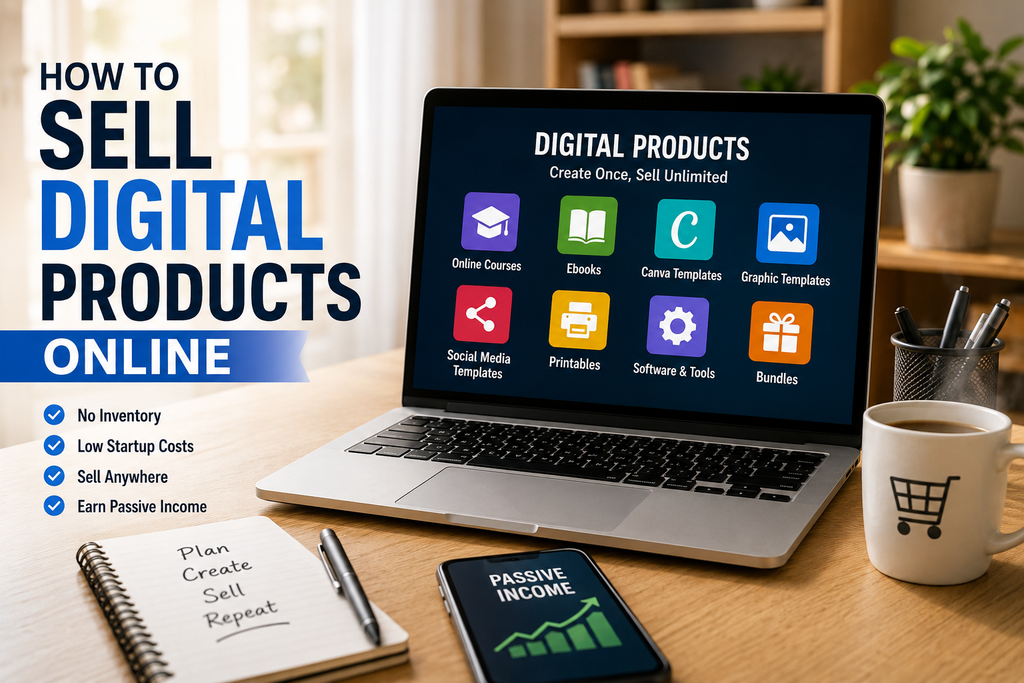
Some common examples include:
The possibilities are much wider than many people realize. If something can be created digitally and provides useful information, saves time, teaches a skill, or helps someone solve a problem, it may have potential as a digital product.
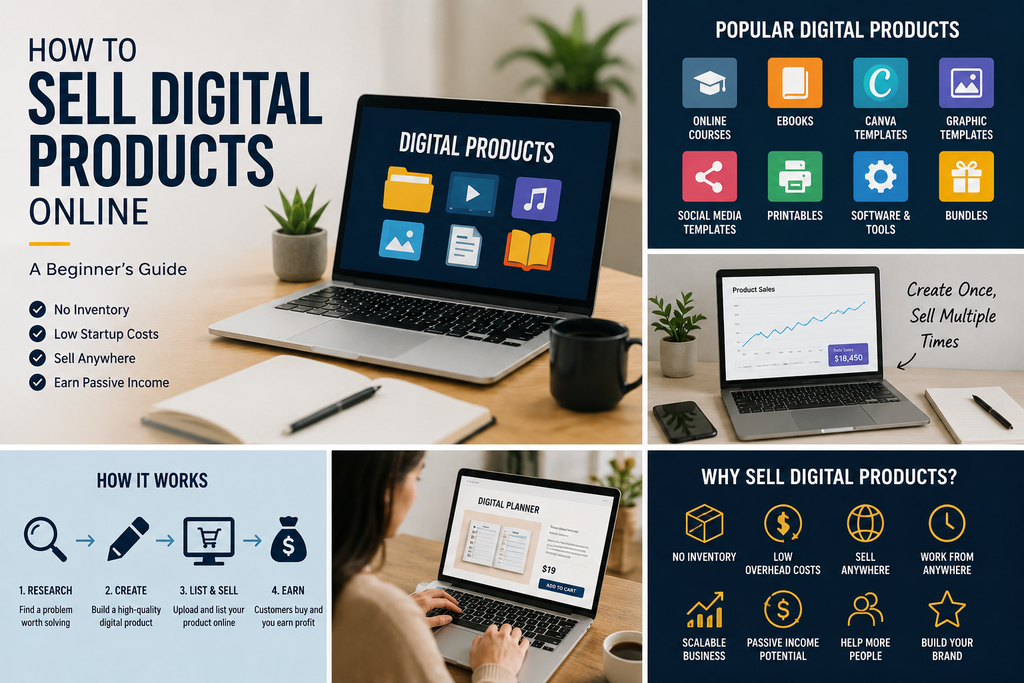
Why Sell Digital Products Online?
There are several reasons people are attracted to the digital product business model.
1. No Physical Inventory
With physical products, you normally need to think about stock, storage, packaging, and delivery. Digital products remove most of those concerns.
For example, if you create an ebook, you can potentially sell the same ebook to hundreds of customers without printing hundreds of copies.
2. Lower Operating Costs
A digital business can often be started with fewer resources than a traditional product business. Your main investment may be your time, skills, software, website, and marketing.
This does not mean digital products are completely free to create or sell. There can still be costs for website hosting, payment processing, advertising, design tools, and other services.
3. Sell to Customers Anywhere
One of the biggest advantages of selling online is the potential to reach customers beyond your local area.
A person creating a useful template, course, or guide can market it to customers in different cities or even different countries.
4. Flexible Business Model
Digital products can fit around other responsibilities. You can work on product creation, customer support, and marketing from a computer or smartphone, depending on the type of business you operate.
This flexibility is one reason digital products have become popular among freelancers, creators, educators, and online entrepreneurs.
What Digital Products Can You Sell?
Choosing the right product is one of the most important decisions you will make.
Online Courses
If you have knowledge or experience in a particular subject, you can turn that knowledge into an online course.
For example, courses can cover:
- Graphic design
- Video editing
- Digital marketing
- Freelancing
- Social media
- Photography
- Business skills
- Software tutorials
- Personal development
A good course should solve a specific problem rather than simply contain a large amount of information.
Canva Templates
Canva templates are another popular category. Businesses, creators, students, and social media users may need ready-made designs that save them time.
Examples include Instagram post templates, presentations, resumes, planners, business flyers, and marketing materials.
Ebooks and Guides
You can package useful knowledge into an ebook or downloadable guide.
Instead of trying to write about everything, focus on a specific topic and make the information practical. A guide that helps someone accomplish a particular task can be more useful than a general book with no clear purpose.
Graphic Design Resources
Designers can create and sell digital assets such as presentation templates, social media graphics, icons, fonts, mockups, and other resources.
Always make sure you have the appropriate rights to sell any fonts, images, graphics, or other assets included in your products.
Digital Bundles
Another approach is combining related products into a bundle.
For example, a social media bundle could include post templates, story templates, content ideas, and planning resources.
A bundle can make an offer feel more complete, but the individual products should still provide genuine value.
How to Start Selling Digital Products Online
Starting does not have to be complicated. A simple process can look like this.
Step 1: Choose a Specific Audience
Before creating a product, decide who you want to help.
Instead of saying, “I want to sell digital products,” think about a specific audience.
For example:
- Small business owners
- Students
- Freelancers
- Content creators
- Teachers
- Social media managers
- New entrepreneurs
Knowing your audience makes it easier to choose products and create marketing content.
Step 2: Find a Problem to Solve
The best digital products usually solve a problem or make something easier.
Ask yourself:
What does my target customer need help with?
Maybe they need better social media designs. Perhaps they want to learn a new skill. They might need a spreadsheet, template, guide, or course that saves them several hours of work.
The closer your product is to a real problem, the easier it can be to explain its value.
Step 3: Create the Product
Once you understand the audience and problem, create the product.
Focus on usefulness rather than simply making the product large.
For example, a 30-page guide that clearly solves a problem can be more valuable than a 100-page guide filled with unnecessary information.
Make sure the product is organized, easy to use, and professionally presented.
Step 4: Choose Where to Sell
You need a way for customers to learn about your product and purchase it.
Depending on your business, you can use your own website, an ecommerce platform, or a suitable digital marketplace.
Your product page should clearly explain:
- What the product is
- Who it is for
- What is included
- How it works
- What problem it solves
- What customers receive after purchase
- The price
- Any important terms or limitations
Clear information helps customers make an informed buying decision.
Step 5: Promote Your Product
Creating a good product is only half of the process. People need to discover it.
You can promote digital products through several channels, including:
- Search engines
- Social media
- YouTube
- Email marketing
- Short-form videos
- Helpful blog content
- Online communities
- Paid advertising
Content marketing can be particularly useful because you can create articles and videos that answer questions your potential customers are already searching for.
For example, if you sell Canva templates, you could publish an article such as “How to Create Professional Instagram Posts” and naturally introduce your templates as one possible solution.
Can You Sell Digital Products Without a Large Audience?
Yes. A huge following is not a requirement.
An audience can certainly help, but you can also attract potential customers through search engines, useful content, partnerships, social media, and advertising.
The key is understanding the difference between getting attention and attracting the right people.
Ten thousand random visitors may be less valuable than a few hundred visitors who are genuinely interested in what you sell.
Common Mistakes Beginners Should Avoid
Many new digital product sellers make the same mistakes.
Creating Before Researching
It is easy to spend days creating a product that nobody actually wants.
Research your audience first. Look at common questions, problems, discussions, and existing products in the market.
Trying to Sell Everything
Offering too many unrelated products can make your business confusing.
It is often better to start with a focused category and expand gradually.
Ignoring Product Quality
Customers are paying for value. Make sure your files work correctly, instructions are clear, and the product looks professional.
Making Unrealistic Income Claims
Digital products can become a profitable business, but there is no guaranteed income. Results depend on factors such as product quality, demand, pricing, marketing, competition, and consistency.
Avoid promising customers that they will definitely earn a specific amount of money.
How Much Can You Make Selling Digital Products?
There is no fixed answer.
Some sellers make occasional sales, while others build larger businesses with multiple products and established audiences. Your results can depend on your niche, pricing, traffic, conversion rate, product quality, and marketing strategy.
For example, selling a $10 product requires a different sales volume from selling a $100 course. Instead of focusing only on a particular income number, focus first on creating something people actually want and building a reliable way to reach potential customers.
Final Thoughts
Selling digital products online can be a practical way to build an internet-based business without dealing with traditional physical inventory and shipping.
The most important part is not simply finding a product and putting it online. You need to understand your audience, identify a genuine problem, create something useful, present it clearly, and consistently market it to the right people.
Start small. Choose one audience, one problem, and one useful product. Learn from your customers and improve your offer over time.
With patience and consistent effort, a simple digital product can become the starting point for a much larger online business.
Ready to start? Explore digital product opportunities, choose a category that matches your skills, and begin by creating something genuinely useful for a specific audience.


Leave a Reply